
What Happens When You Leave a Cavity Untreated? Understanding the Stages of Decay
A cavity may begin as a small area of weakened enamel, but it can grow deeper without dental care. The tooth decay process progresses from the tooth’s hard outer surface toward the nerves and blood vessels inside it. In severe cases, an untreated cavity can cause an abscess, tooth loss, and an infection that spreads beyond the tooth. But early care can often stop cavity progression and protect more of your natural tooth. Trenton Dental Care helps our patients in Trenton, MI, understand the stages of tooth decay and their care options.
What Causes Cavities?
Cavities form when bacteria in dental plaque interact with sugar and starch from food and drinks. This process produces acids that attack tooth enamel. Repeated acid attacks can weaken the enamel and create a hole in the tooth. Several factors may raise your risk:
- Frequent Sugary Foods and Drinks – Soda, candy, sweetened coffee, and other sugary items give harmful bacteria more fuel.
- Poor Brushing and Flossing Habits – Plaque can stay on the teeth when it’s not removed daily.
- Dry Mouth – Saliva helps wash away food and protect enamel. Certain medicines and health conditions can reduce saliva.
- Deep Grooves in the Teeth – Food and plaque can collect in the chewing surfaces of back teeth.
- Limited Fluoride Exposure – Fluoride helps strengthen enamel and can support the repair of early mineral loss.
Decay doesn’t always cause pain at first. Regular dental exams allow our dentist to look for changes before they become more serious. Below are the stages of tooth decay explained.
Stage 1 – Enamel Demineralization
The first of the five stages of tooth decay is enamel demineralization. During this stage, acids pull minerals from the enamel. You might notice a chalky white spot, but many people see no change at all. There may be no pain because the damage hasn’t reached the sensitive parts of your tooth. Early mineral loss can sometimes be stopped or reversed with fluoride, improved oral hygiene, and changes in eating habits.
Stage 2 – Enamel Decay
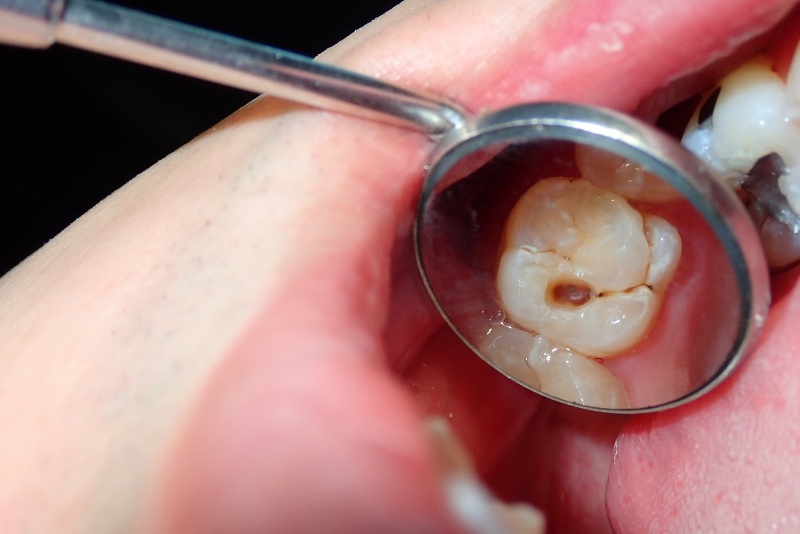
If acid attacks continue, the enamel can break down, forming a small hole. This is a cavity. The area may look white, brown, or dark, although some cavities are difficult to see without a dental exam or X-rays. Enamel doesn’t contain nerves, so a cavity at this stage may not hurt. However, the missing tooth structure will not grow back. A dentist will need to remove the damaged area and repair the tooth with a filling.
Stage 3 – Dentin Damage
Dentin is the softer layer beneath the enamel. Damage may spread more quickly once decay reaches small tubes in the dentin that connect to the inner part of the tooth. Warning signs that this has happened include:
- Sensitivity – Hot, cold, or sweet foods may cause a brief, sharp feeling.
- Pain When Biting – Pressure on the damaged tooth may feel uncomfortable.
- Visible Changes – The cavity may look larger or darker.
Depending on how much healthy tooth structure remains, you may need a filling or dental crown at this stage.
Stage 4 – Pulp Infection
The pulp is the soft tissue in the center of the tooth. It contains nerves and blood vessels. When bacteria reach the pulp, it can become inflamed or infected. At this stage, pain may become strong, lasting, or hard to ignore. The tooth might hurt without any clear trigger, but heat, cold, biting, or lying down can make the pain worse.
A root canal treatment may be necessary to remove the infected pulp, clean the inner tooth, and seal it. Our team may then place a crown to help protect the tooth. If the tooth cannot be saved, an extraction might be necessary.
Stage 5 – Dental Abscess
A dental abscess is a pocket of pus caused by infection. It may form near the tooth root or in the surrounding gum and bone and requires prompt professional care to prevent the infection from spreading. Among its symptoms are:
- Severe or Throbbing Pain – Discomfort may spread to the jaw, ear, or neck.
- Swelling – The face, jaw, or gums may become swollen or tender.
- Bad Taste or Drainage – An abscess may release fluid into the mouth.
- Fever or Illness – A spreading infection can affect your overall health.
Treatment Options at Each Stage
The right treatment depends on how far the decay has traveled:
- Early Mineral Loss – Fluoride treatments, fluoride toothpaste, improved brushing, and dietary changes may help restore minerals.
- Small Enamel Cavity – A filling can replace damaged tooth structure and seal the area.
- Dentin Damage – A larger filling or crown may be needed to rebuild and protect the tooth.
- Pulp Infection – Root canal treatment may remove infection while allowing you to keep the tooth.
- Abscess or Severe Damage – Treatment may include drainage, root canal therapy, or extraction. A dentist may also prescribe antibiotics if the infection is spreading.
What Happens If You Ignore a Cavity?
Ignoring a cavity involves serious risks. Once a true hole has formed, it usually becomes larger without professional care. Common untreated cavity effects include:
- Worsening Pain – Minor sensitivity may turn into constant or severe discomfort.
- More Complex Treatment – A filling may be enough early on, but deeper decay could require a crown or root canal.
- Infection – Bacteria may enter the pulp and form an abscess.
- Tooth Fracture – Decay can weaken the tooth until part of it breaks.
- Tooth Loss – A badly damaged tooth may no longer be repairable.
- Higher Costs – Delayed treatment could lead to more involved and costly care.
How to Prevent Cavities
A few daily habits can lower your risk of developing cavities:
- Brush Twice a Day – Use fluoride toothpaste and brush for roughly two minutes.
- Clean Between Your Teeth – Floss or use another interdental cleaner once a day.
- Limit Frequent Sugar and Acid – Reduce repeated snacking and sipping on sweet or acidic drinks.
- Drink Water – Water helps rinse the mouth. Fluoridated water can also strengthen enamel.
- Attend Dental Visits – Exams and professional cleanings at Trenton Dental Care can help detect problems early.
- Ask About Added Protection – Depending on your risk, our dental team may recommend fluoride treatments or dental sealants.
Contact Trenton Dental Care to Protect Your Smile
Don’t wait until you have a toothache to seek care. Some cavities go unnoticed, so contact us today to schedule a dental exam in Trenton, MI.