
The Effects of Smoking and Vaping on Your Teeth
Smoking rates have fallen over time, but millions of adults still smoke cigarettes. In recent years, vaping has also become increasingly popular, especially among younger adults. While these products work in different ways, both can expose your mouth to nicotine and other chemicals. At Trenton Dental Care, we want our patients to understand how tobacco and e-cigarettes may affect their smiles. Smoking effects on teeth can include stains, cavities, and gum disease, while vaping effects on teeth are still being studied, but may cause dry mouth, irritation, and a higher risk of dental problems. Knowing the risks can help you make informed choices about your oral health.
How Smoking Affects Your Oral Health
Cigarette smoke passes through your mouth each time you inhale. Your teeth, gums, tongue, and other tissues are directly exposed to nicotine, tar, and other chemicals. The connection between smoking and oral health is serious. This habit may reduce blood flow to your gums and can weaken your body’s ability to fight infection or heal damaged tissue. As a result, people who smoke have about twice the risk of gum disease as people who don’t. Worse yet, smoking can make gum disease treatment less effective.
Common Dental Problems Caused by Smoking
Understanding how smoking damages teeth can help you spot trouble early. Common problems include:
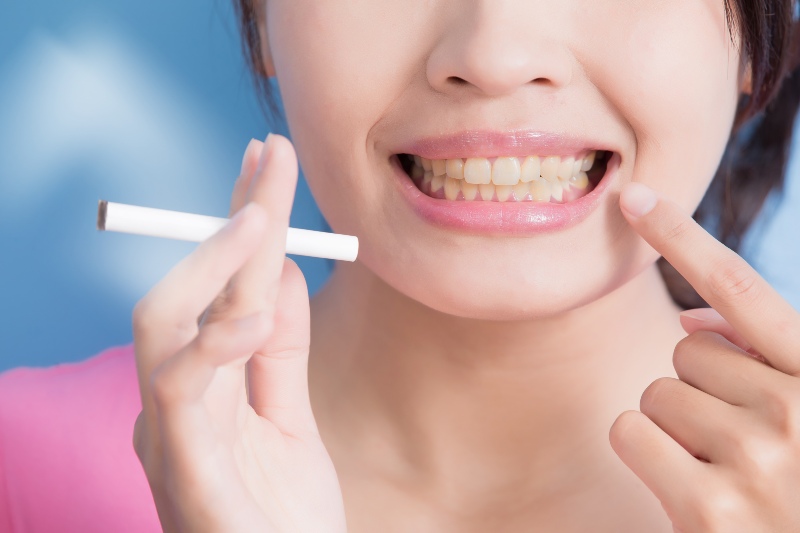
- Tooth Stains – Tar and nicotine can leave yellow or brown stains on your teeth. These stains may become harder to remove over time.
- Bad Breath – Smoke can leave a strong odor in the mouth. Dry mouth and gum disease may worsen the odor.
- Cavities – Smoking is linked to a higher rate of untreated tooth decay. More than 40% of adults aged 20-64 who currently smoke have cavities, compared with about 20% of adults who have never smoked.
- Gum Disease – Bacteria can collect below the gumline and cause an infection. Without treatment, the gums and bone that support the teeth may break down.
- Loose or Missing Teeth – Advanced gum disease can weaken the tissue that holds the teeth in place. Teeth may become loose or need to be removed.
- Slower Healing – Smoking may slow healing after a tooth extraction, dental implant, or gum treatment.
- Oral Cancer – Tobacco use raises the risk of cancers affecting the mouth, throat, and nearby areas.
How Vaping Impacts Your Teeth and Gums
Vapes heat a liquid to create an aerosol that users inhale. This aerosol may contain nicotine, flavorings, metals, and other chemicals. Because of these additives, current research on vaping and dental health suggests several possible risks:
- Dry Mouth – Vape ingredients may reduce saliva or leave the mouth feeling dry. Saliva helps wash away food and control harmful bacteria.
- Cavities – A dry mouth makes it easier for plaque and bacteria to build up. Sweet or flavored vape liquids may add to the risk.
- Gum Irritation – Vape aerosol can cause redness, tenderness, burning, or irritation in the mouth.
- Bad Breath or Taste – People who vape may notice bad breath, an unpleasant taste, or discomfort.
- Bacterial Buildup – Vape aerosol may stick to teeth, tongue, gums, and dental implants. This could make it easier for bacteria to attach to these surfaces.
Smoking vs. Vaping: Which Is Worse for Oral Health?
Traditional smoking has a longer and stronger record of causing gum disease, tooth loss, oral cancer, and other health problems. Cigarette smoke also contains many toxic chemicals created when tobacco burns. But while vaping may expose users to fewer harmful chemicals than smoking cigarettes, that doesn’t make it safe. The long-term vaping effects on teeth aren’t yet fully known, but e-cigarettes often still contain nicotine and substances that irritate the mouth.
For your oral health, the safest choice is to avoid both smoking and vaping. If you currently smoke, switching completely away from cigarettes may reduce certain risks, but your goal should be to work toward quitting all tobacco and nicotine products.
Warning Signs of Tobacco-Related Dental Problems
Some dental problems don’t cause pain at first. Schedule a dental exam if you notice:
- Bleeding Gums – Gums that bleed while brushing or flossing may be inflamed.
- Red or Swollen Gums – Ongoing swelling can be a sign of infection.
- Receding Gums – Gum tissue may pull away, making the teeth look longer.
- Loose Teeth – Movement may mean the bone or tissue supporting a tooth has weakened.
- Ongoing Bad Breath – Bad breath that doesn’t improve may indicate gum disease or dry mouth.
- Mouth Sores or Patches – A sore, lump, or red or white patch that lasts longer than two weeks should be checked promptly.
- Pain or Trouble Chewing – These symptoms may signal decay, infection, or advanced gum disease.
Can Your Teeth Recover After Quitting Smoking or Vaping?
Quitting can benefit your mouth at any age. Blood flow may improve, and your gums may respond better to treatment. Your mouth may also become better at fighting infection and healing after dental care. But some damage will not disappear on its own. Deep stains, cavities, gum recession, bone loss, and missing teeth may require professional treatment. Depending on your needs, this may include:
- A professional dental cleaning
- Scaling and root planing
- Fillings or crowns
- Whitening
- Restorative care
Tips for Protecting Your Oral Health
A few daily and professional habits can lower your risk:
- Brush Twice a Day – Use fluoride toothpaste and a soft-bristled toothbrush.
- Clean Between Your Teeth – Floss or use another approved interdental cleaner every day.
- Drink Water – Water can ease dry mouth and help rinse away food and bacteria.
- Limit Sugary Foods and Drinks – Sugar feeds bacteria that contribute to cavities.
- Visit Your Dentist Regularly – Exams and cleanings help detect concerns before they become harder to treat.
- Be Honest About Tobacco Use – Tell your dentist how often you smoke or vape. This information helps the dental team provide safer, more personal care.
- Ask for Help Quitting – Counseling and medication are more effective together than either approach alone.
Contact Us for Oral Health Care in Trenton, MI
Whether you smoke, vape, or simply want to improve your smile, professional treatment at Trenton Dental Care can make a difference. Contact us in Trenton, MI, today to schedule an appointment.