
What Happens During Professional Teeth Cleaning? A Step-by-Step Guide
Routine dental cleanings are among the best ways to protect your teeth and gums. Even with daily brushing and flossing, plaque can build up in hard-to-reach areas. Over time, it may harden into tartar, which must be removed by a dental professional. If you’re in Trenton, MI, rely on Trenton Dental Care. Before your first visit, let us explain why routine cleanings are an important part of your long-term oral health. Knowing the teeth cleaning step-by-step process can make your appointment feel easier and more comfortable.
What Is Professional Teeth Cleaning?
Professional teeth cleaning is a preventive dental service that removes plaque, tartar, and surface stains from your teeth. It’s usually performed by a dental hygienist, but your dentist will also examine your mouth and review their findings as part of the process.
A routine dental cleaning procedure is different from a deep cleaning. Routine cleaning is usually intended for patients who have generally healthy gums. A deep cleaning, also called scaling and root planing, may be recommended for patients with gum disease. After evaluating your mouth, our team can determine which type of cleaning is right for you.
Step 1 – Initial Oral Examination
The dental cleaning process usually begins with an examination of your teeth and gums. The hygienist may use a small mirror to check inside your mouth for:
- Plaque and Tartar Buildup – These deposits often collect along the gumline and between teeth.
- Signs of Gum Problems – Redness, swelling, bleeding, or deep spaces around the teeth may point to gum disease.
- Possible Tooth Decay – Dark areas, damaged enamel, or sensitive spots may require a closer look from the dentist.
- Changes Inside the Mouth – The dental exam may look at your tongue, cheeks, and other soft tissues.
If your hygienist notices an area of concern, the dentist may examine it before the cleaning continues. Dental X-rays might also be used to see areas that aren’t visible during a regular oral examination.
Step 2 – Plaque and Tartar Removal
The next part of a dental cleaning procedure is often called scaling. During this step, the hygienist uses special tools to remove plaque and hardened tartar from the teeth. You may hear light scraping sounds as the hygienist works. They’ll pay close attention to the:
- Gumline – Plaque and tartar often collect where the teeth meet the gums.
- Spaces Between Teeth – These areas can be difficult to clean with a toothbrush.
- Back Teeth – Molars have grooves and hard-to-reach surfaces that may hold buildup.
- Crowded Areas – Teeth that overlap may require extra care during cleaning.
You may feel pressure, but routine scaling shouldn’t be painful. Tell your hygienist if you feel uncomfortable or have sensitive teeth so that they can adjust your cleaning.
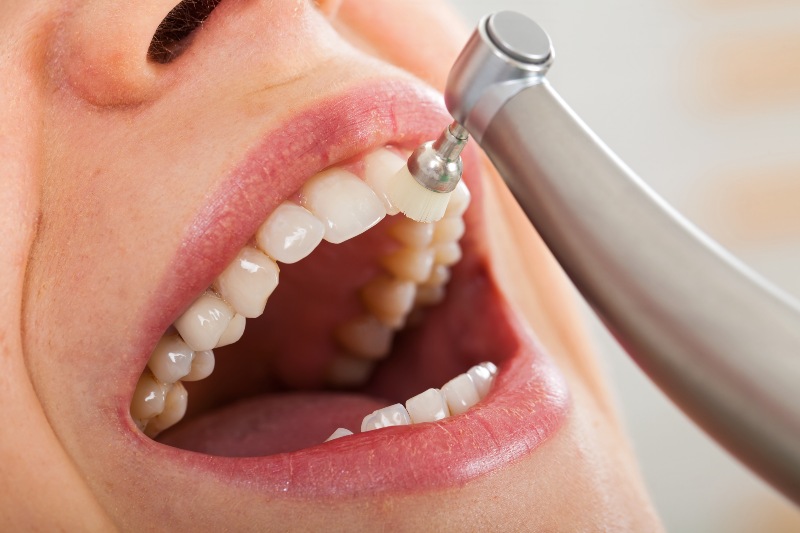
Step 3 – Professional Polishing
After plaque and tartar are removed, the hygienist will polish your teeth to help remove surface stains caused by coffee, tea, tobacco, and certain foods. This will also give your teeth a smooth, clean feeling. However, polishing is not the same as professional teeth whitening.
Step 4 – Expert Flossing
Your hygienist will floss between your teeth to remove any remaining plaque, polishing paste, or loose debris. Professional flossing also helps the hygienist identify areas where your gums bleed or the floss feels tight. Cleaning between the teeth helps remove plaque and can lower the risk of tooth decay and gum disease, so we may show you better ways to floss at home while you’re in the dental chair.
What Your Dentist May Discuss After Cleaning
After the cleaning, your dentist or hygienist will explain what they found during your appointment and any suggestions they may have:
- Cavities or Damaged Teeth – A filling, crown, or another treatment may be recommended.
- Gum Health – Bleeding, swelling, or deeper gum pockets may require additional care.
- Tooth Sensitivity – Your dentist may suggest a sensitivity toothpaste or other treatment.
- Fluoride Treatment – Fluoride helps strengthen enamel and protect against cavities.
- Your Cleaning Schedule – Some patients benefit from more frequent visits based on their oral health.
Benefits of Regular Professional Teeth Cleanings
Routine cleanings support both your smile and your comfort. If you’re still wondering what happens during dental cleaning and why it matters, consider these benefits:
- Remove Hardened Tartar – Professional tools can remove deposits that brushing cannot.
- Support Healthier Gums – A dental cleaning removes buildup, reducing common sources of gum irritation.
- Lower the Risk of Cavities – Cleaning removes plaque from areas where decay may begin.
- Improve Your Breath – Plaque, trapped food, and bacteria may contribute to bad breath.
- Reduce Surface Stains – Polishing can remove some stains and improve the look of your smile.
- Find Concerns Early – Regular visits allow our dental team to notice changes before they become larger problems.
Your dentist will recommend a cleaning schedule based on your needs. Many people receive cleanings every six months, but some patients need visits slightly more often.
How to Maintain Results Between Visits
A professional cleaning gives you a fresh start, but daily care helps protect the results:
- Brush Twice a Day – Use fluoride toothpaste and brush for two minutes twice daily.
- Clean Between Your Teeth Daily – Use floss or another interdental cleaner recommended by your dental team.
- Limit Sugary Snacks and Drinks – Frequent sugar exposure can increase the risk of cavities.
- Drink Water – Water helps rinse away food particles and supports a healthy mouth.
- Replace Worn Toothbrushes – Change your toothbrush or brush head when the bristles become frayed.
- Keep Routine Dental Visits – Regular exams and cleanings help your dentist track changes in your oral health.
Schedule a Professional Teeth Cleaning at Trenton Dental Care Today
A professional cleaning at Trenton Dental Care helps maintain a cleaner mouth and a healthier smile. Contact us in Trenton, MI, today to schedule your next appointment.